Friday, May 1, 2020

Feeding the Lake!

Today, May 1, is supposed to be the first day of our 2020 cruise season on Cayuga, kicking off a busy spring season taking classes and guests onto the lake.  Alas, COVID has delayed that, but here’s one part of what we would’ve experienced.  This recent aerial image (courtesy of our friend, Bill Hecht) shows you what the lake pretty much looks like today.   

And here's a picture from the Floating Classroom on a similar day!


There is certainly a lot of mud and debris entering the lake, right?  But it's not all bad…consider that this is how our lake ecosystem gets “fed” every spring, fertilizing the plants that feed the fish.  More on that to come, but let’s check in upstream...  

Here’s a picture of Six Mile Creek at Plain St., in downtown Ithaca.  (Thx. Franny Lux!)

This was at about 9am this morning, and Franny pointed out that water levels were going down, because she could see the debris line that marked high water.   


Can you see what she is talking about? She was absolutely right!  Six Mile Creek crested at about 11pm last night, as is indicated on this USGS graph of Six Mile Creek Water levels a bit upstream.


You can look up local water levels anytime.  Just search “USGS”, “New York” and the name of your stream.   

Today's Fun fact:  20 years ago, when I worked at the Environmental Protection Agency and conducted stream assessments, we judged high water marks in many areas by the “Toilet Paper Index”.  That’s right, how far up in the streamside trees did floating toilet paper get deposited during a flood?  Yuck!  We’ve come a long way… but not everywhere!    ~Bill


Thursday, April 30, 2020

Get to Know Your Streams

Hi everyone! 

If you click on this picture to enlarge it: I see leaf food for
insects, creating a food chain for our trout.
We have a fun activity for you to explore. You can try this virtually from your living room or in person out at a stream, creek, or even in the ditch by your house. 

When we release our trout with each school, we have students assess the stream habitat. To ensure that the trout will be happy and healthy in their stream, we split the stream habitat into groupings and assess how different features might affect the survival of our trout. We have this worksheet to help guide you and for you to fill out as you go. You will notice picture captions to help you interpret what you are seeing and to get you thinking for analyzing your results.
If you click on this image: I see a tree fallen across the stream,
isn't that cool?! Looks like a good place for trout to hide.
To do this activity at home, you will need to get creative. Start by analyzing the pictures in this post carefully for each stream feature outlined in the worksheet. Then use your imagination/memory of streams to fill in anywhere you have trouble directly seeing an answer in our photos.

To do this activity at a nearby stream, you will want to print the worksheet or use a phone. Then take your worksheet and curiosity to the safest socially distant location (it will not matter whether or not trout would live there, as would be the case for a ditch).

If you click on this image: Think about the colors your trout
might turn in this stream.
This post is an expansion on our post celebrating Earth Day earlier this month, so you can find more pictures by clicking on that link. Additionally, the Earth Day post pictures highlight some pollution and human impact issues that could affect the trout, which are worth taking into consideration in your stream assessments.


If you try this activity, please let us know your results! We would love any feedback!

Monday, April 27, 2020

Great Day to Investigate a Vernal Pool!

Its been raining now for two days, so our back woods is chock full of ... not puddles, but "vernal pools"!  These pools are incredibly important in our environment... and its amazing what you can see with a just smartphone and household materials.  Let's check it out!

I'm going to edge right up and collect a jar full of water... that is pretty green, isn't it?  Its chilly, but spring is well underway for these tiny algae.   Do you think anything eats that algae?


OK, now, we're going to head inside where its warm, and grab a paper coffee filter (leftover from back when we used disposable filters!) to get a better look.  I'll let the whole pool sample filter through, and then rinse whatever gets caught off into a smaller container with some clear water.   Do you think we'll find anything moving?


Take a look....


Using just my phone camera, here are some close ups... not the best quality, but again: just with a very old iPhone.

 Mosquito larva (midge)...


A copepod (you can find better images at www.DiscoverCayugaLake.org!)
And wait, what's this... could it be?  Everyone in the Trout in the Classroom knows what this little one is... DAPHNIA!  Look at that bright green gut!

(You can find a better image of Daphnia right on this blog, in the Images page!)

Yep.  This temporary little pool of water is where our forest (and stream!) foodweb begins.  We'll think more about what eats daphnia later this week.  Trout classes, you ought to know!

For complete instructions to help you through this activity, see the "For Teachers" page!
                            ~ Bill, aka, "The Trout Guy"

Thursday, April 23, 2020

Something to See: Shadbush blooming!


Shadbush in Bloom!

Each spring, there are certain signs that, no matter what the weather's like, spring is coming. The sparse white bloom of eastern Shadbush (Amelanchier canadensis) also known as Shadblow, Juneberry and Serviceberry, is one I look for.

Shadbush is a small, understory deciduous tree, ranging from well drained hillsides to wetland. Along field edges, however, it can grow to 25 feet tall, and is easily recognized.  (I bet you'll them now, too!)

This small tree's five-petaled flowers come out before leaves grow. They show up quite early in the forest, before black cherry or dogwood are blooming, and sometimes they even beat the daffodils.


OK, But WHAT DO THAT HAVE TO DO WITH TROUT?

Shadbush is one of a few fishy plants of spring.
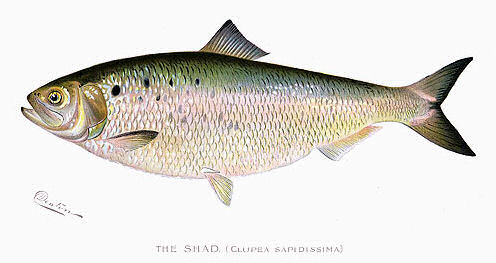
It got its name because it blooms around the same time shad return to their spawning grounds, swimming up into streams from the Atlantic Coast, even as far as the Great Lakes.   That makes them similar to some trout, but they're not related.   In fact, the American shad, "the fish that fed the nation's founders", was once one of our most important food sources, arriving just in time as food stores ran low at the end of a long winter.  So the blooming shadblow was more than just a pretty sight, in meant food on the table!

See the source image
Guess what month Juneberry fruits show up?
Amelanchiers are members of the rose family, which includes apple, cherry and hawthorn trees.  Their fruits are flavorful and edible, but seedy!  Birds and other wildlife usually get to them first.  Native Americans relied on shadbush fruits as food and medicine.  As fall comes on the Shadbush stars again, with leaves turning deep red to orange.  See you notice them on your next hike upstream this spring!  (Look for them along Upper Taughannock Creek, Salmon Creek, Upper Buttermilk or at Upper Treman State Park where your trout were released!)

Wednesday, April 22, 2020

Happy Earth Day 50th Anniversary!!


Happy Earth Day 2020! We released trout at Six Mile Creek downtown (by the police station) about a month ago. As you look at these pictures taken there earlier this week, what might be detrimental for your trout's new habitat? Don't be afraid to think outside the box! Please email or post 2 to 3 observations you have, so we can respond and create a dialogue. Often we do this as part of a hike on the day we release the trout, so for interested teachers and family, we have a walk lesson plan we would be happy to share. Also, be sure to check out our video and the other local celebratory efforts live online at 2pm this afternoon!

Monday, April 20, 2020

Habitat Observation Tip for the Day!

If you hit the trail in search of one of our trout release locations, keep an eye on logs as you hike. They'll tell you alot about streamside goings on if you look with a little thought.

Here's an excellent post from local naturalist/track, LInda Spielman.

Testing the Water at Upper Treman SP


Hi everyone!  A little snow this past weekend didn't stop us from getting out there to explore. 

Here's Marina at Upper Treman State Park, checking the acidity of water where young trout from Northeast Elementary were released last month.   She is using the same procedure students have been using in classroom aquariums all year.  Acidity (pH scale) is an important indicator of stable or changing water quality in spring streams. 

Click on the image, or here, to see the full test process, and enjoy that  (last?) snow from the comfort of home!  We know its supposed to be spring, but winter's last word can still be beautiful!


Friday, April 17, 2020

Its National Haiku Day!

Our trout grow up with poetry...

The water is cold
Through the shimmering bubbles
A flash of silver.

Darting and dashing
Shoveling in rocks for food
Swish of tail, brown trout 
These are Haiku from our secret vault.  Submitted by Ms. Laurie Rubin's 2nd grade class, 2009. Create your own and share with us!

Tuesday, April 14, 2020

Caroline Trout Release!

Hi all! I visited Caroline Elementary School a week ago (4/7) and released trout from Caroline and other schools into Six Mile Creek behind the school. You can check out the Caroline trout release video in our "Trout in the Classroom Online 2020" Google Photos album. For those of you interested in exploring the site with your families: I walked through the playground to the nature trail, but there is a better access point further down the trail from where I released the trout (and don't worry your trout will find their way downstream). I encourage anyone who is interested to go look at your trout's new habitat, or just look remotely from the video, and think about what features might particularly shock them coming from their life in captivity.  Caroline students, if you have any questions you can tell Ms. Antczak or MS. Chapman or Ms. Makela, or send them to us and we will answer them in a future video!  

Saturday, April 11, 2020

We're On TV!

How do you break down a trout aquarium and maintain physical distance?  Not so easy!  Find out more in this week's episode of "Walk in the Park", by our pal, Mr. Tony Ingraham.  


“Trout in the Classroom Rescued” will play on Ithaca cable channel 13, Saturday April 11, or watch online anytime https://Walkinthepark.tv.  You'll also get to see us release said trout into Taughannock  Creek.